
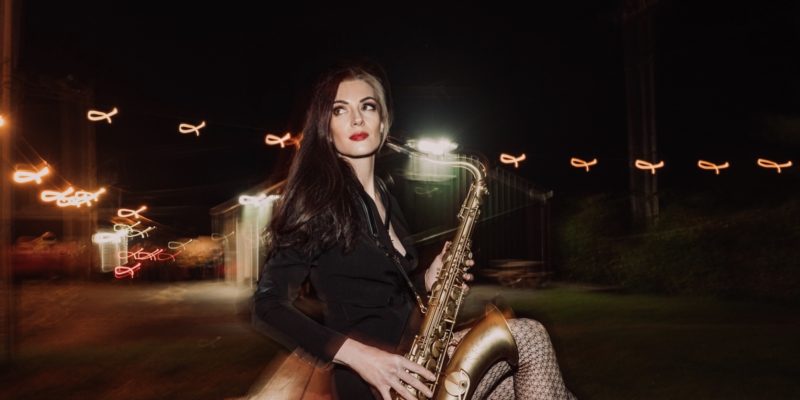
Globally renowned saxophonist & performer Alli Hogan is a touring artist with an impressive repertoire of live experiences & creative projects to her name.
Alongside juggling the chaos of a busy sax schedule, Alli is also a singer in a band, a multi-instrumentalist, and a mother of two.
We were blessed with the chance to interview Alli Hogan, to find out more about her journey, her experiences in the Midwest music scene, and her plans for the future. Here’s how it went.
* * *
Who or what first inspired your fascination with or passion for the saxophone?
In fourth grade, our elementary music teacher took us on a field trip to the local high school to check out instruments for the following year. I instantly fell for the saxophone and even begged my teacher, promising, “I will play it for the rest of my life!”
So you can imagine my heartbreak when I was handed a clarinet instead. I truly despised it because it was forced on me,and my stubborn streak didn’t help either. But once the summer before eighth grade hit, my dad went out, bought a saxophone, and placed it on the floor with some method books. He said, “You have two and a half months to learn this. If you can work hard and become the best at it, they’ll have no choice.” That summer, I worked through the lesson books every single day until I got the tracks perfect. When ninth grade started, I walked in with my saxophone, left the clarinet behind, and earned a first-chair placement all in one day!
Later in high school, seeing Candy Dulfer rock out on MTV with Prince was a massive lightbulb moment. What I love most about the sax is how it can completely shift the vibe of a song—whether it’s a catchy hook, a subtle texture, or stepping into the spotlight to let loose.
In what way did studying musical theatre impact your playing or performance approach as a saxophonist?
“Musical theatre completely changed how I think about performing: it taught me that music is storytelling, and how you tell that story matters just as much as your technical chops.”
Because of that training, I don’t just stand there playing parts; I’m thinking about energy, dynamics, movement, timing,and how to connect with the room. It also gave me an appreciation for the big-picture production. You’re part of a team where your job is to either own the moment or support the overall arrangement without drawing fire. Learning the dance of when to do which has been invaluable.
How did you first get your foot in the door in the Chicago and Midwest music scenes, and what advice would you give other musicians?
There’s no secret velvet-rope door in Chicago—getting established here is about a mix of preparation, opportunity, genuine relationships, and consistency. It’s a million small steps that stack up over time.
Chicago’s music community is ridiculously talented. You have to be willing to show up, learn from folks, and prove you’re someone people can trust both musically and professionally.
“My biggest advice? Be great at your craft, but also be someone people actually want to hang out with.”
Be prepared, dependable, and treat every gig like it’s the most important one because you never know who’s listening. And don’t wait until you feel “ready”—you have to keep learning as you carve your own path.
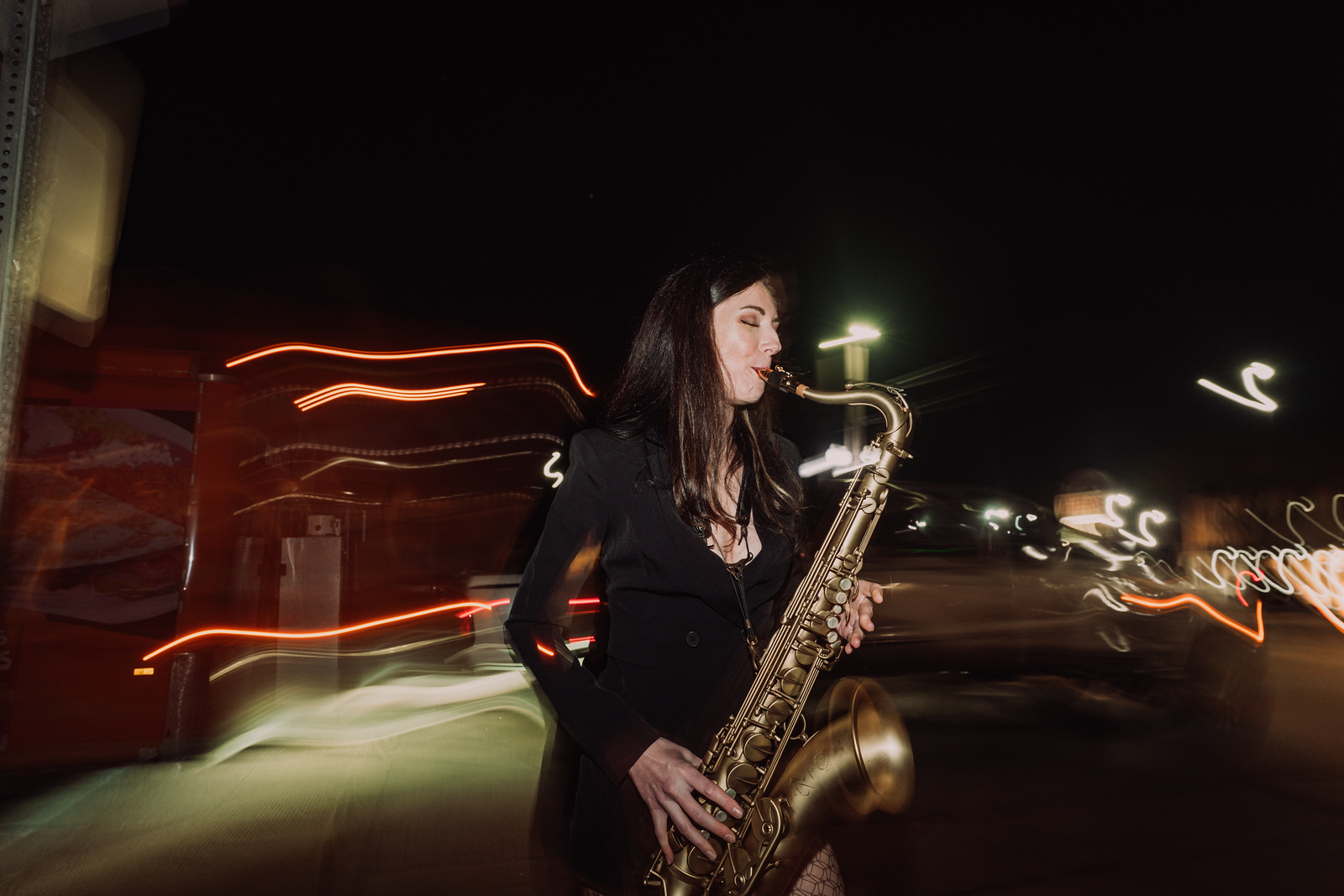
You’ve had such a diverse career, from The Reflex to The Blooze Brothers to the Chicago jazz scene. How do you decide what’s next, and is there a particular style that encapsulates your brand of playing?
I’ve never had any interest in staying inside a single musical box. Playing with The Reflex lets me lean into iconic ’80s pop-rock sax moments; with The Blooze Brothers, it’s all about high-octane horn-section energy where tight, laser-focused articulation is everything. Meanwhile, jazz gives me the freedom to stretch out and keep growing.
If I had to sum up my brand, it’s rooted in versatility, high energy, and personality. I’m drawn to anything that challenges me, introduces me to new opportunities, and connects me with cool people. I love the projects I’m involved in, I’m looking forward to another great year with them, and… maybe some more funk!
Have you ever had to say a difficult no to a good opportunity, and how do you move past that?
Oh, absolutely. One of the toughest lessons in this business is realizing that a “good” opportunity isn’t always the right opportunity in the moment.
Between my gig schedule, running Musical Owl, family, and my own need to rest, I can’t do it all. Passing on things used to give me major FOMO, worrying I was blowing my one big shot. But now I look at the big picture: Does this align with where I’m heading? Can I give it the 100% it deserves? Protecting your time and honoring existing commitments is part of being a true professional. I try to make those choices with gratitude instead of fear.
You’re also a vocalist and multi-instrumentalist, performing with The Handsome Bandit and the acoustic duo Alli & Matt. How do you balance these disciplines?
They all feed different parts of my musical soul! Singing puts me in a completely different relationship with a song than playing the sax does, and picking up other instruments keeps my brain sharp.
Practically speaking, it’s definitely a balancing act. Different projects mean different charts, rehearsals, and schedules, so organization is my best friend. But being a multi-instrumentalist makes me a better musician overall—it forces me to listen to the whole arrangement and think about what the song needs, rather than just what a specific instrument can do.
You’re a mother of two. How have you navigated performing around parenthood, and have your children seen you perform?
It is a constant juggle, and there’s no magic formula. Being a mom is my top priority, but music is a huge part of who I am. I’ve learned they can coexist—it just takes support from your inner circle, some wildly color-coded calendars, and creative planning. Gigs happen when families usually hang out—evenings and weekends—so there are missed bedtimes and complex childcare logistics.
But it’s so valuable for my kids to see that you can work hard at something you love while staying fully present for your family. And seeing their faces when they come to a show is the absolute BEST. My heart explodes every time they realize that the music they hear and the practice they see me do is a real, live thing that pays off in the world.
Tell us about Musical Owl and the importance of music education.
Musical Owl is my grassroots music lesson studio in Hampshire, IL. Being an educator brings another level of meaning.Onstage, you’re giving a moment to an audience; in a lesson room, you get to watch a student finally nail a tricky passage or find their confidence for the first time. That is deeply rewarding.
“Beyond just learning an instrument, music education teaches life skills: patience, grit, active listening, and teamwork. We have to invest in music education if we want vibrant local music scenes in the future. The goal isn’t just to make touring pros—it’s to help people build a lifelong love for music, because music truly heals.”
Have you seen significant changes in the Chicago live music scene over the years?
Yes, but the best thing about Chicago hasn’t changed: the depth of jaw-dropping musical talent here. Our blues, jazz, and rock roots run deep.
Unfortunately, I’ve also seen some iconic stages close. My biggest worry right now is the struggle our venues face. When a local room closes, we don’t just lose a stage—we lose a gathering place, a community hub, and a proving ground for artists to grow. We’ve got to be intentional about supporting the whole ecosystem.
What does the future of music look like, and how do we prevent live venues and AI music generation from discouraging people from learning instruments or engaging with live audiences?
This is a tough one, but I believe the future comes down to what we choose to value. AI is just the latest wave of technology, but we have to protect the difference between generating content and experiencing something genuinely human.
There is pure magic in watching a musician take a risk in real time, or feeling an entire room react to a moment that will never happen the exact same way twice.
“Live music is messy, physical, alive, and becomes a memory—experiences AI simply cannot replicate.”
Are there areas of music or performance you haven’t explored yet but would like to?
I’ve been very lucky to perform at some truly iconic stages like The Lincoln Center, House of Blues, Hard Rock, Harris Theatre, and Des Plaines Theatre. Moving forward, I’m looking forward to exploring future tours, playing more regional venues, and sharing the stage with some legends.
What’s been one of your most impactful live shows, and what makes an unforgettable experience onstage?
The most impactful shows aren’t always the biggest. They’re the ones where you can physically feel the connection between the music and the crowd.
With The Reflex, people’s faces light up because that music is tied to strong memories, and I love hearing how much Duran Duran meant to them. With The Blooze Brothers, the sheer electricity of a massive horn section turns a whole room into a party. An unforgettable show happens when everyone in the room—band and audience alike—is fully present for those spontaneous, magical moments.
What do you have planned for 2027, and what’s your biggest ambition right now?
I’m looking at 2027 as a huge year to build on everything I’ve cultivated: growing as a performer, stepping more fully into my artistic identity, and finding new ways to connect with people.
I want to keep tearing it up with my current projects while expanding my reach. Plus, my original band, The Handsome Bandit, has some exciting goals ahead—we’re looking forward to wrapping up some writing and recording and moving the needle forward with our original works. I’m totally thrilled to see what’s next!
* * *
Find Alli Hogan on Instagram, Facebook, TikTok & her Website.

Hello SSM,
Thank you for the great interview with Alli….BRAVA!
PS – I was amused by the anecdote involving “The Torture Stick” (clarinet)…which I can identify with! 😉