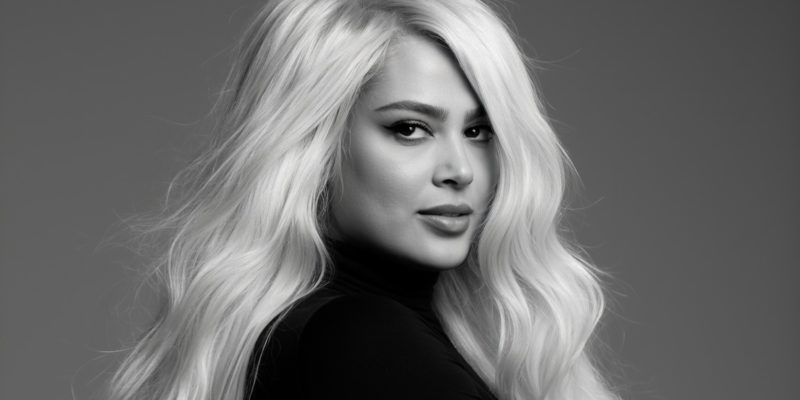
In escaping the tyranny of her homeland Iran, the boldly soulful and captivating singer and songwriter Shery M has found solace and escapism through her unwavering passion for music and performance.
Her journey is incredibly unique, inspiring and compelling, and as her second English single It’s Possible makes waves online, we were blessed with the chance to interview Shery M.
We talk in depth about her approach to making music, her experiences and artistic mindset, her ambitions, and her incredible rise from being stripped of her identity to finding success and true satisfaction in the arts.
Here’s the conversation in full.
* * *
Hi Shery M – massive congrats for the launch of the stunning single ‘It’s Possible’. For those new to your journey, who or what first influenced you to make music?
Before I ever discovered singing, I was falling in love with music through two incredible Persian female legends — Hayedeh and Googoosh. They were my first window into what a powerful woman’s voice could do.
But what truly pulled me into this role as an artist — what made me trade the dream of becoming an astronaut for the dream of becoming an artist — was watching Beyoncé’s music video for “Naughty Girl.” Something shifted in me in that moment. I saw a woman who was powerful, who gave power to others simply by standing in hers. That was it for me. I knew that’s what I wanted to do with my life.
And in my own way, with my Persian fan base, I believe I have started doing that. Now my goal is simply to share my story — and my voice — with the world.
Your story is incredibly unique and inspiring, and your music reflects that – can you briefly outline your journey from your Persian upbringing to the point of releasing the new song?
I always say Persian upbringing — because that is what it is, and that distinction matters to me.
As a female singer coming from a country like Iran — especially twelve years ago — the idea of pursuing music professionally was impossible on every level. The families push you toward medicine, law, engineering schools — that is their definition of success. And on top of that, the laws of the country don’t allow women to be professional singers, athletes, or artists. Even men need to get permission for every single song they release. Imagine growing up in that environment and deciding you want to be a singer. It sounds delusional. But I was exactly that — delusional enough to keep going.
I had a hit song in Malaysia when I was 14, but I couldn’t travel to pursue it because the law required a man’s permission for a woman to leave the country. So instead I turned to Persian music — first I studied opera at the Tehran Conservatorium — and then even that got taken from me when the regime banned women from studying singing entirely.
So I went underground. I made music illegally. It spread across the Farsi-speaking world. And when my fame grew to the point that I became a direct target of the authorities, I had to flee. Before getting out of Iran, there was a time every week I had to change my phone, move to a new city. What they accused me of — Mofsed-e-fil-arz — is one of the most serious charges a regime can make against a person. Had I been caught, the consequences would have been unimaginable.
“In 2016, I escaped through Dubai to Vienna, surrendered my passport, and applied for asylum. I left behind everything I had built — every career, every connection, every piece of home. I could only save myself.”
That is the journey that led to “It’s Possible.”
How much has your mindset and creative process evolved since releasing your debut English single ‘Goin’ Gone’?
I feel like I’ve always had the songs inside me — they’ve been there for years, waiting. What has changed is my clarity. I know exactly what I want now. I know what kind of music I need to create, what instruments should carry a feeling, what space a vocal needs to breathe.
I truly believe we all have a calling. And I think I am finally in the place — emotionally, creatively, structurally — where I am answering mine fully.
The biggest shift is that I no longer make music just to be heard. I make music to be felt — by the listener and by myself on stage. Every song I create, I’m already thinking about performing it live, about how it will move in a room full of people. That dimension is now deeply part of my creative process.
Let’s talk about ‘It’s Possible’ – how did you write this, and how did you come to work with the mighty Alan Roy Scott?
It all began at the Artisjus Songbook Camp 2025 in Budapest — a four-day songwriting camp that brought together artists, writers, and producers from all over the world.
The first day was about getting to know each other. We actually wrote something that first day that I still call a banger — I’m very excited to eventually release that one too. But the second day is when everything changed. That was the day I got to work closely with Alan.
The theme of the camp was centred on the freedom of music in Hungary — the idea of walls coming down, of freedom being fought for and won. And it resonated so deeply because Hungary itself knows what it means to have been on the wrong side of a wall. The connection to my own story was immediate and overwhelming.
Alan and I started talking about how impossible things can look — and how that impossibility shifts entirely when you commit hard enough to making something real. That conversation became the seed of the song.
What followed was one of the most intense creative days of my life. It wasn’t a typical songwriting session — it was more like therapy. We went into the darkest places: the paralysis of being a refugee, the moment of having your passport taken, being blocked from performing, waiting in legal limbo and not knowing when or if it would ever end. There were tears. There was silence. And through all of it, Alan guided the process with such grace — not just as a songwriter, but as a human being.
I am so grateful that the song exists. It’s the truest thing I’ve made in English so far.
With just piano and vocals initially, the song draws upon genuine emotions to connect in a profound way. Are you vocally trained, or have you honed your style through practice and passion?
I have been training my entire life for this — long before anyone outside of Iran knew my name.
Before I ever had a formal vocal coach, I was studying voices. Whitney Houston. Céline Dion. I would listen to them for hours and try to understand how they moved through a phrase, how they chose to hold a note, how they breathed. I copied them — obsessively, lovingly — because that’s how I learned what a voice is capable of.
Then came formal training, vocal coaches, and eventually opera studies at the Tehran Conservatorium, where I performed as a soloist with the Belcanto Orchestra. That classical foundation gave me something that never leaves you — a structural understanding of the instrument.
But honestly? I still don’t feel like I’m showing my full potential. I genuinely believe that as human beings we are limitless — and as long as I believe that, I will keep pushing. I practice to this day. I will practice for as long as I sing.
What are the main values you want to bring to modern music, and what is it important for listeners to understand about you as an artist and songwriter?
I don’t think there is anything entirely new left to add to music — every note, every chord, every structure has been felt before in some form. But what is always new is the human experience behind it. And everyone’s signature, everyone’s story, makes the creation unique.
What I want to bring is unity. That is the word I keep coming back to. I want people to come together — across borders, across cultures, across languages.
“I believe the highest calling of humanity is to become one. And I believe music is one of the only forces in the world that makes that feel possible.”
As for what I am as a songwriter — I am still growing into that. Right now, I am primarily a storyteller. I share what I have lived. And what I want every person who listens to my music to feel is this: you are not alone. Whatever you are carrying, whoever you are — you are not alone. We are all in this together.
How difficult is it to represent your heritage and story in being from Iran, during such a divisive time of conflict, and what’s been the biggest lesson you’ve learned through creative expression and finding your voice?
Honestly, I have been struggling with this for a long time. The difficulty is not the desire — the desire to represent my people and my culture is absolute. The difficulty is the gap in understanding.
“How do you explain to someone who has never experienced state-enforced silence — who has never had their art declared illegal by a government — what it means to choose music anyway?”
I try my best to translate that in a language the whole world can access. But I know I still have a longer road ahead before I feel I’m truly giving the full picture.
And then there is what happened at the beginning of 2026. What my people went through then changed all of us permanently. We will never be the same. And that weight — that grief — lives inside me while I create.
But here is what I’ve learned: the darkness does not win if you refuse to let it silence you. I am sad. I am in pain with my country and my people. And I will still stand up. I will still talk, still share, still create. That is how I fight — not with weapons, but with a voice. And I will never let anything put that voice down.
This idea of being stripped of your identity and waiting in limbo is so painful to hear about and is something only those who’ve experienced it can truly understand. Is your hope to shine light on the turmoil you’ve been through, or to connect with those who’ve been through it themselves, or is it more of a therapeutic and personal process?
All three — but if I had to choose the deepest truth, it’s about connection.
I want to reach the people who have lived something like this. The ones who know what it feels like to be in limbo, to have your identity suspended, to not know who you are when everything that defined you — your home, your language, your documents, your freedom of movement — is suddenly gone. To those people, I want to say: I see you. I was there too.
At the same time, every creative process is inherently therapeutic. Going into that songwriting session in Budapest, revisiting those memories — it was not easy. But something lifts when you transform pain into something you can share. That’s what I hope listeners feel too: that you can move through the hardest things, and come out carrying something instead of being buried by it.
And for those who haven’t lived this — I hope the music makes them curious. Makes them want to understand. Because even if they can’t fully see it, maybe they can feel the edges of it. That matters too.
You were quoted as saying that ‘It’s Possible’ came from realising you could find a home inside yourself, that where you belong is not a place but a part of you – that’s a powerful and universal sentiment. How can others find the same kind of self-kindness and acceptance in today’s world – what’s your best piece of advice for those struggling to belong?
I want to be honest — this is not something I found easily or quickly. For most of my life, I have not felt like I belonged anywhere. Not as a child, not when I left Iran, not in the years of legal waiting in Vienna. I’ve had to cut roots more than once, and each time it left a kind of internal silence that is very hard to describe.
What I can tell you is this: belonging is not waiting for a place to accept you. It is a switch — and at some point, in the darkest moment, you realize the switch is inside you. You are the one who flips it.
For me, the moment came when there was literally nothing left outside of myself to hold onto. And in that emptiness, I found something I hadn’t expected: love. Love for myself. Love for life. And once I connected to that — everything shifted.
“So my advice, as simple as it sounds, is this: love yourself. Not because it’s easy, but because it is the only thing that doesn’t depend on anyone else.”
Everything you are looking for out there is already inside you. The belonging, the home, the strength — it’s all there. You just have to be still enough to feel it.
What’s your plan creatively or performance-wise in the coming months?
I am so happy to share that over the past year I have been working incredibly hard on an album — so I can tell more of every step of the story. I cannot announce the exact release date yet, but I am deeply excited and working hard to bring this body of work together. It means everything to me.
And for the summer — I have some very energetic music coming that I am also very excited about. My next release will be a World Cup song, showing how limitless we are when we are united. That theme of unity runs through everything I do right now.
On the performance side, I am also currently building out a full live band setup. When I step on stage, I want it to feel like a real event — something people carry with them long after they leave. That is what I am building toward.
What’s your biggest ambition right now?
My brain is honestly chaotic when it comes to ambition — because I want everything, and I want it deeply, not just in a surface way.
If I bring it down to the most essential thing: I want to perform for people on the biggest stages possible. I want to look out at a crowd and feel that connection — that moment where a room full of strangers all feel the same thing at the same time because of a song. That is the most powerful thing that exists in this world, and I am chasing it completely.
But I will never stop. As Michael Jackson said — don’t stop till you get enough. That is my motto. I will not stop.
Is there anything else we need to know?
Just this: if you are reading this and you have ever been told that your dream is impossible — that it is too big, too different, too dangerous, too foreign — I want you to know that those words say nothing about you and everything about the person who said them.
I was told it was impossible. I chose to be delusional enough to keep going anyway. And here I am.
It’s possible.
* * *
Download or stream It’s Possible. Find Shery M on Instagram, X, Facebook.