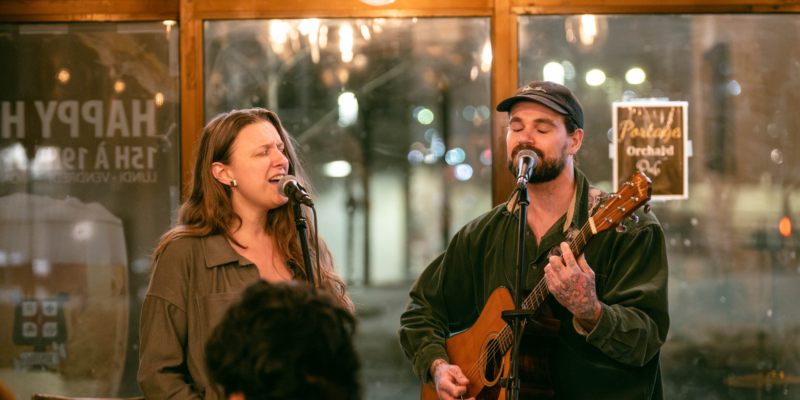
Having released one of this summer’s most engaging, memorable and popular folk pop singles, we were blessed with the chance to interview the songwriter and artist Al Sam, to find out more about his collaborative song Together, with Natasha Liard.
We talk about the making of the song, the pros and cons of collaboration, live performance, experience, struggles and successes.
Together has become one of the most streamed indie folk pop songs of the season, and continues to draw in listeners and viewers across the globe, for its refreshingly organic live sound, and the genuine reflective honesty at the heart of the writing.
Al Sam was kind enough to offer some genuine insight regarding the creative and emotional journey that led to this. Here’s our conversation in full.
* * *
Massive congratulations on the beautiful debut for your duo. Talk us through the making of the song. What came first, and how collaborative was the creative process?
Songwriting tends to come in waves for me. I do not really think of it as writer’s block. Sometimes I am simply focused on other things, living through experiences and collecting thoughts. Eventually, enough builds up that songs start appearing again.
Together began with a simple chord progression and rhythm. It immediately felt warm, easygoing and fun, but I did not initially know that it would become a duet. As the lyrics began taking shape, I realized that they were drawing from the relationship Natasha and I were going through, including some of its difficulties but also a genuine appreciation for what we had.
I asked Natasha, who was the person living through those experiences with me, to write a part. Once we started singing it together, the harmonies completely changed the song. It felt like a low-key summer banger. It was catchy and light, but still emotionally substantial without trying to be poetic merely for the sake of sounding poetic.
“We played it live many times before recording it. At one four-hour show, we performed it near the beginning of the night. After hearing several hours of other music, someone came up and asked us about that particular song because it had remained stuck in her head the entire time. Reactions like that made it obvious that the song was connecting with people.”
We deliberately kept performing it so audiences could become familiar with it and eventually sing along. That also helped us understand what the song needed before entering the studio.
We recorded it with Dean Watson at Buckingham Palace Audio. Dean also played bass, which enters later in the arrangement because I like allowing songs to build gradually. Benjamin Mayo-Goldberg, who I play with in Catching Rain, came in to record percussion. As he was preparing to leave, he mentioned that he thought we wanted vibraphone. I did not even know he played it, but there happened to be one in the studio. In hindsight, the vibraphone feels inseparable from the song.
That is what I love about the finished recording. The acoustic guitar and our voices were already enough for the song to work live, but the production became what it is through everyone’s contribution. We kept the arrangement minimal enough that the harmonies remained central, while giving the recording small details that made it more distinctive. Jonathan Kaspy completed the mastering.
We also chose to release a single rather than immediately attempting an album. I have previously experienced how the financial, administrative and promotional sides of releasing music can cause burnout. Natasha is a professional photographer and musician with a daughter, while I perform, organize community events and work in live sound. Our lives are already full.
Rather than release a large amount of music and become overwhelmed trying to support it, we wanted to focus on one song we truly believed in and give it the attention it deserved throughout 2026.
The lyrics are wonderful, somewhere between familiar and completely unpredictable. What inspires the way you write?
Well first off, thank you! I have to say, I rarely begin with lyrics or a clearly planned subject. Music almost always comes first. A chord progression and a rhythm. Once that framework exists, words begin appearing.
When I was around 11 or 12, before I became serious about songwriting, I wrote poetry and slam. At that age I would sometimes begin with lyrics and then try to fit music around them. Over time, however, I realized that my strongest writing happened in the opposite direction.
“Rap was a major influence on me when I was young. What fascinated me was the structure inside the rhythmic frame. The number of syllables, the internal patterns, the symmetry between phrases and the moments when an artist deliberately breaks that symmetry. When it is done well, the disruption feels surprising but still resolves in a satisfying way.”
That became central to how I understand lyrics. Words are not only there to communicate literal meaning. They can act as a lead instrument, form a melody, create harmony and contribute to the rhythm.
When I begin writing, I often produce words or sounds simply because they feel satisfying inside the music. Then I examine what has appeared and try to understand where it is leading. In the past, I could write entire songs that way without consciously deciding what they were about.
What surprised me was that the songs usually did have a subject. Sometimes the meaning became clear after a few months. In other cases, I understood what I had written only years later. Something that initially seemed disconnected or overly abstract would eventually make perfect sense in relation to what I had been experiencing at the time.
My process has become more deliberate with age and practice. I still begin from intuition, but once I recognize the direction, I can guide it more intentionally and make the idea clearer.
English is also not my first language, French is. And even though English is the language in which I write most often, it took time to develop a large enough vocabulary to instinctively find words with the right sounds, syllable counts and emotional meaning. That practice has given me more control without removing the subconscious part of the process.
How long have you been making music as solo artists, and what did the duo aspect bring out in your creativity?
We both began very young. Natasha started writing songs and performing under her own name when she was around 11 or 12. She later stopped performing for approximately ten years before eventually returning to it.
I started learning guitar and writing songs around the age of 12. As soon as I picked up the guitar, my goal was to learn enough to accompany myself and write my own material. I had already experimented with songs as a child, but that was when it became a serious and lasting part of my life.
My songwriting has gone through a few pauses, but I have always returned to it. I began performing regularly as a solo artist after moving back to the Ottawa region in 2023, and I started using the name Al Sam sometime in 2024.
“Collaboration has often been difficult for me because of how intensely focused I become while writing. When ideas are flowing, I might write a song in fifteen minutes. I need to stop consciously thinking and allow the intuitive process to take over. Having another person in the room interrupting, discussing or evaluating each line can pull me out of that state.”
That does not mean I dislike collaboration. I enjoy taking someone else’s song and adding chords, a bridge, lyrics or an arrangement. Other musicians have also made important contributions to my work by suggesting different endings, chord choices and structures. What is difficult for me is trying to create every element simultaneously with another person.
Natasha and I therefore tend to collaborate in stages. One of us writes the foundation of a song, and the other contributes a section, harmony or musical idea. Together developed that way. I brought in the initial song, and Natasha added her own part.
Her writing has influenced me because it operates very differently from mine. Her melodies often move more slowly, with longer and more elongated vocal phrases. I tend to be much busier rhythmically and fit more words into the same amount of space.
Listening to her and writing with her has pushed me toward ballads, waltzes and other forms that I was not exploring as frequently before. I have begun writing certain songs specifically with her voice and our combination in mind.
My chord choices and musical instincts are still recognizable, but the collaboration has given me a reason to explore a different emotional and rhythmic space. Sometimes you exhaust one creative territory for a while and need to enter another. Working with Natasha has opened that door.
How did you meet, and what does this song represent for you?
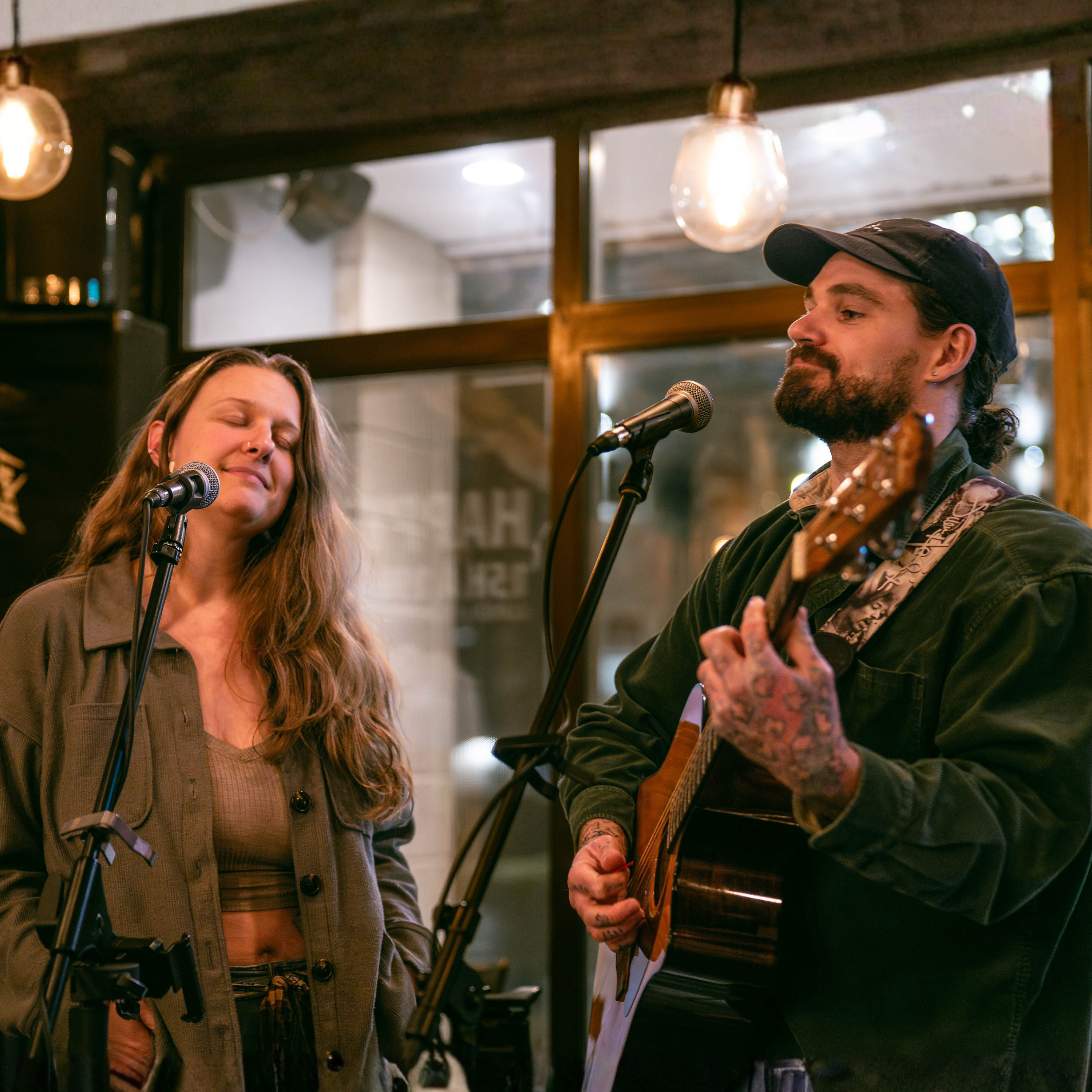
We met several years ago through the music circuit in Ottawa and Gatineau. At the time, we were in very different places in our lives. We became friends and occasionally collaborated live and enjoyed how our voices blended.
Our individual repertoires were different, but there was enough overlap that performing together felt natural. Like many friendships between busy musicians, there were periods when we saw each other regularly and others when we barely crossed paths. The connection remained strong even when our lives moved in different directions.
A few years later, circumstances changed and we reached a point where we wanted to spend more time together. The friendship gradually developed into a romantic relationship, and our lives became much more intertwined.
That transition was not immediately easy. Knowing someone as a friend and knowing them as a partner are very different experiences. We had to learn how to understand each other again in a new context, and the early part of the relationship could be intense.
Together came out of some of those difficult first moments. The lyrics are inspired by what we were going through, although the song takes artistic liberties and should not be understood as a perfectly literal account.
For us, it represents a period that was difficult but ultimately temporary. We can now look back on it with much more perspective, and we are grateful that it is in the past.
Most listeners initially experience Together as a happy song, and that was intentional. The music is warm, catchy and easygoing. That emotional contrast creates room for the lyrics to address something more complicated without making the song feel heavy or closed off.
Sometimes a cheerful sound gives people more space to approach a difficult conversation. That duality is central to what the song means to us.
Will you be performing live as a duo this summer, and where can people catch you?
“We will be performing on August 20 at the Musée de la Gare in Témiscamingue.”
More generally, people are most likely to find us playing around Ottawa and Gatineau. We regularly perform a few songs together at the Portage Orchard open mic, which I host every Monday.
We both perform frequently, although many of our paid engagements are currently separate because live music is also how we earn our living. Whenever our schedules align, however, we enjoy bringing the duo material into our individual shows or appearing together at community events.
If you could play at any UK festival or event, which would it be and why?
Definitely Boardmasters in Newquay, Cornwall.
The combination of live music, surfing, skating and the coast feels like the most natural possible environment for our music. Together has an easygoing, summery quality that would fit naturally into that atmosphere.
I also genuinely love watching people surf and skate. Whenever I see festivals that combine music with those cultures, they immediately stand out to me. Being able to perform while also experiencing the competitions and the coastal environment would be incredible.
Out of the UK festivals I have seen, Boardmasters feels like the place where our genre and personalities would make the most sense.
What is something about you that might surprise fans of Together?
I spent approximately nine years in the Canadian Armed Forces.
When I was young, I was not certain what I wanted to do with my life. I had many different interests and tried several jobs, but the infantry remained a strange kind of Plan B that never disappeared. I had been fascinated by it since childhood. The idea of living in the woods, learning practical skills, testing yourself physically and understanding warfare was very appealing.
I joined shortly after turning 18. During my career, I eventually served in Baghdad, where I worked as part of protection and escort teams for NATO personnel travelling to meetings and other official activities.
The experience taught me an enormous amount, but it was very different from the artistic life people might associate with Together.
A snowboarding injury, unrelated to my military service, was later aggravated and gradually became severe enough that I could no longer perform my military job properly. I was eventually released from the Armed Forces.
That forced me to reconsider almost everything. I could not simply move into construction or another highly physical career, and I had to ask what skills I already possessed that could realistically become a livelihood. Music was the obvious answer, even though I had previously convinced myself that I would never pursue it professionally.
When I was younger, music had partly been a way to deal with social anxiety. I imagined that if I became good enough, the instrument could help me connect with people. Eventually, I realized that skill alone did not solve the deeper problem. I needed to learn how to be around people and how to accept myself without depending on music as a crutch.
By the time my military career ended, I had changed. I was able to return to music from a healthier place. Performing, organizing events and working in live sound now allow me to connect with people while remaining focused on creating or solving something.
“The military also changed how I understand hardship. Life does not necessarily become easier. You adjust, develop different expectations and sometimes learn to value the difficult experiences for what they eventually produce.”
Losing movility and chronic pain involved a real grieving process, but it also pushed me toward the life I have now. I became a full-time musician through a sequence of events I never would have planned, doing the exact thing I once swore I would not do professionally.
Is there anything else we should know?
Natasha and I recently travelled to Barrie, Ontario, to record several live performances at Underscored Sound. Those sessions should be released soon and will give people another way to hear the duo beyond the studio version of Together.
I have also officially begun working on my first full album, Days Like This, once again with Dean Watson.
There is currently a home-recorded acoustic version of the title track on my YouTube channel. Anyone who searches for Al Sam and Days Like This can hear the early form of the song, but the album production is moving in a much larger direction.
I am extremely happy with what we are creating and excited to begin sharing more of it.
People can follow Al Sam (@al_sam_music) and Natasha Liard (@natashaliardmusic) on social media to hear the live recordings and future releases. Saving Together, sharing it or sending us a message makes a real difference.
One reason we enjoy performing live is that we can see exactly how a song affects someone. Distance does not have to prevent that connection. When someone takes the time to tell us that the music meant something to them, it means the world to us.