
For years now, independent artists have been fed the same Spotify advice on repeat. Get on playlists. Chase streams. Release more music. Post more content. Find more curators.
Yet despite an endless supply of Spotify growth gurus and algorithm experts, many artists are still asking the same question: why isn’t it working?
The truth is that the Spotify algorithm in 2026 has evolved far beyond the simplistic metrics that dominated music marketing conversations a few years ago. While playlist placements and first-week streams still matter, they’re no longer the defining factors in how Spotify recommends music to listeners.
More importantly, they’re not necessarily what gets independent artists heard.
The Reality of Streaming in 2026
There is no point pretending that the modern streaming landscape is easy.
More music is uploaded every day than at any other point in history. Independent artists are competing not only with major label campaigns but with a rapidly increasing volume of content created using AI music tools and automated production workflows.
Millions of tracks now compete for listener attention across Spotify alone, making visibility harder to achieve than ever before.
However, the picture isn’t entirely bleak.
While the sheer quantity of music has exploded, the barriers to entry have effectively disappeared. Artists no longer need label backing, expensive studio budgets, or radio connections to reach a global audience. A compelling song can still travel internationally through playlists, social media, fan communities, and algorithmic recommendations.
Success is undoubtedly harder to achieve, but access has never been greater.
The Spotify Algorithm for Independent Artists Has Changed
Much of the outdated advice surrounding Spotify music promotion focuses on generating as many plays as possible. But the platform’s music recommendation algorithms are becoming increasingly sophisticated, prioritising listener behaviour over vanity metrics.
In simple terms, Spotify isn’t just tracking who clicked play. It’s tracking who came back.
Did listeners save the track? Did they listen all the way through? Did they revisit it days later? Did they explore the artist’s catalogue? Did they share the song with someone else?
These signals offer far more insight into genuine audience engagement than a temporary spike in streams ever could.
For artists wondering how to grow on Spotify, this shift represents both a challenge and an opportunity.
Playlist exposure alone rarely builds a lasting audience.
Many artists achieve thousands of streams through playlist campaigns only to see little growth in followers, monthly listeners or long-term fan engagement.
The real objective isn’t getting added to playlists.
It’s giving listeners a reason to stay.
What Independent Artists Should Do Instead
Rather than focusing exclusively on streams, artists should focus on retention.
Create songs worth revisiting.
Build a recognisable artistic identity.
Encourage followers to save tracks rather than simply listen once.
Develop communities outside Spotify through newsletters, social media and direct fan engagement.
Because in 2026, music discovery isn’t just about being found.
It’s about being remembered.
The artists seeing the strongest growth today are often not those generating the biggest initial numbers. They’re the ones building repeat listening habits and cultivating genuine audience loyalty.
And as Spotify’s recommendation systems continue to evolve, that distinction is likely to become even more important.
How Spotify Recommends Music in 2026
Understanding how Spotify recommends music has become essential for independent artist marketing.
Features like Spotify Discover Weekly and Spotify Release Radar continue to drive significant listener activity, but access to these recommendation engines increasingly depends on engagement quality rather than sheer volume.
Spotify’s systems are constantly learning from listener habits.
When users repeatedly engage with an artist, save songs, follow profiles and return to future releases, Spotify receives a clear signal that the music is resonating.
Those are the artists who tend to benefit most from algorithmic growth.
In other words, the algorithm is becoming less interested in manufactured spikes and more interested in evidence of genuine audience connection.
The AI Music Factor
Perhaps the most discussed trend in music right now is the rise of AI generated music.
Some artists fear that AI music will dominate streaming platforms entirely. Others see AI music tools as useful assistants for production, mastering, artwork creation, promotion and workflow management.
The reality likely sits somewhere between the two extremes.
AI-generated tracks are increasing rapidly, and listeners will undoubtedly encounter more machine-assisted content in the years ahead. Yet music has always been about more than technical perfection. People connect with stories, personalities, emotions, imperfections and experiences.
The future of AI music may change how songs are created, marketed and distributed, but it is far less certain that AI can replace the human connection that sits at the heart of great art.
That remains the independent artist’s greatest advantage.
The future of streaming may be driven by algorithms, AI and data, but success still belongs to artists who create something listeners genuinely want to return to.
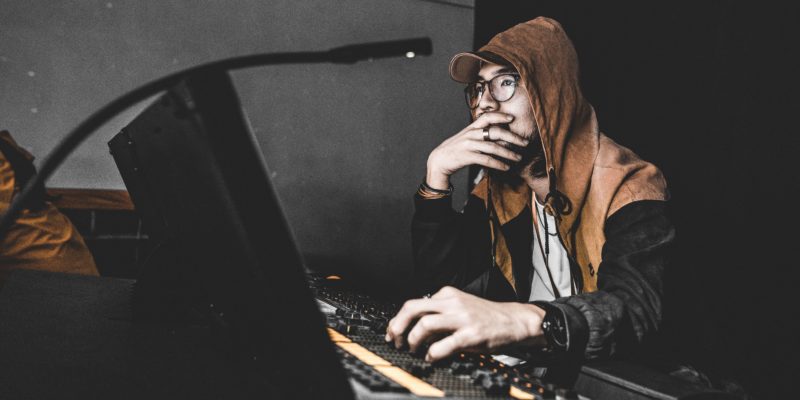
Header Photo by Clam Lo.